Archive for category: Useful Information

This next study by Nakatani et al. was done in late 2023 in Japan and was published in 2024.  It focused on employees at small and medium sized companies.  It found “the odds of contacting COVID-19 were higher among vaccinated individuals compared to unvaccinated individuals (adjusted OR 1.85 (95% CI: 1.33-2.57, p<0.001).”  In other words, being vaccinated increased the odds of getting infected with COVID by 85% compared to those who were unvaccinated.

When looking a little deeper and focusing on the impact of the number of COVID shots, here were the results. 

“Participants who received one to two doses had an adjusted OR of 1.63 (95% CI: 1.08-2.46, p=0.020).

Those who received three to four doses had an adjusted OR of 2.04 (95% CI: 1.35-3.08, p=0.001).

Those who received five to seven doses had an adjusted OR of 2.21 (95% CI: 1.07-4.56, p=0.033).” 

As people received more doses of COVID shots, their risk of infection went up significantly.

https://pubmed.ncbi.nlm.nih.gov/39803093

In 2022, physicians and scientists at Cleveland Clinic did a study that was published in April 2023.  The study was called, Effectiveness of the Coronarvirus Disease 2019 Bivalent Vaccine.  Their data demonstrated that the cumulative incidence of COVID illness was highest in the group that received the highest number of COVID shots.  Conversely, the group that had the lowest incidence of cumulative infection was the one that received zero doses. 

Effectiveness of the Coronavirus Disease 2019 Bivalent Vaccine Nabin K. Shrestha,1, Patrick C. Burke,2 Amy S. Nowacki,3, James F. Simon,4 Amanda Hagen,5 and Steven M. Gordon1 1Department of Infectious Diseases, Cleveland Clinic, Cleveland, Ohio, USA, 2Infection Prevention, Cleveland Clinic, Cleveland, Ohio, USA, 3Quantitative Health Sciences, Cleveland Clinic, Cleveland, Ohio, USA, 4Enterprise Business Intelligence, Cleveland Clinic, Cleveland, Ohio, USA, and 5Occupational Health, Cleveland Clinic, Cleveland, Ohio, USA https://pubmed.ncbi.nlm.nih.gov/37274183/      https://doi.org/10.1093/ofid/ofad209

Those who got 2 COVID shots did worse than those who got one.  Those who got 3 did worse than those who got 2.  And so on.  The group that did the best was the one that received zero shots.  While looking at the situation from a different angle compared to the Chemaitelly et al. study (discussed in the previous post), the take home message was the same – COVID shots make things worse, not better. And the more you get, the worse it gets. 

I am surprised that in August 2025, I continue to run into some people who still think the COVID shots are safe and effective.  Nothing could be further from the truth.  The medical evidence over the past 5 years demonstrates that they are extremely dangerous.  Further, not only are they ineffective, they actually increase the risk of infection.  Five years of data is a lot to share.  But we have to start somewhere, so here we go.

The first study I ran across that demonstrated what I was seeing clinically was the one by Chemaitelly et al., Duration of mRNA vaccine protection against SARS-CoV-2 Omicron BA.1 and BA.2 subvariants in Qatar.    

This study was done in 2021, published in 2022 and done in Qatar.  The location of this study is significant in that Qatar is a wealthy nation.  Only rich countries got COVID shots right away and many poor countries never received them at all.  Further, Qatar essentially has just one health care system and one electronic medical record for the entire country.  Thus, the data to millions of its citizens are accessible for medical study.

The data showed that early in the study, two weeks after the 2nd shot (recall that was when we were told people were officially “vaccinated”), the shots had its greatest effect reaching about 50% effectiveness.  Immediately, this effectiveness declined in a linear fashion, plummeting to just 9% after 3 months.  (As an aside, vaccines that are only 50% effective are far too weak to achieve “herd immunity” and are normally never FDA approved.  A vaccine that is only 9% effective is too weak to make any significant, positive clinical impact at all, and is far outweighed by the side effects.)  After 6 months, the effectiveness was measured at -17.8%.  The effectiveness became negative.  The treated group was more likely to get COVID compared to the unvaccinated.  The same phenomenon was demonstrated after booster doses. 

Duration of mRNA vaccine protection against SARS-CoV-2 Omicron BA.1 and BA.2 subvariants in Qatar
Hiam Chemaitelly 1,2,3✉, Houssein H. Ayoub 4, Sawsan AlMukdad1,2, Peter Coyle 5,6,7, Patrick Tang 8, Hadi M. Yassine 6,9, Hebah A. Al-Khatib6,9, Maria K. Smatti6,9, Mohammad R. Hasan8, Zaina Al-Kanaani5, Einas Al-Kuwari5, Andrew Jeremijenko 5, Anvar Hassan Kaleeckal5, Ali Nizar Latif5, Riyazuddin Mohammad Shaik5, Hanan F. Abdul-Rahim10, Gheyath K. Nasrallah 6,9, Mohamed Ghaith Al-Kuwari11, Adeel A. Butt 3,5,12, Hamad Eid Al-Romaihi13, Mohamed H. Al-Thani13, Abdullatif Al-Khal 5, Roberto Bertollini13 & Laith J. Abu-Raddad 1,2,3,10✉
https://pubmed.ncbi.nlm.nih.gov/35654888/ https://doi.org/10.1038/s41467-022-30895-3

After this study was published, more followed demonstrating the same problem – not only were these shots ineffective, they made the problem worse. I will share some of these studies in the near future.

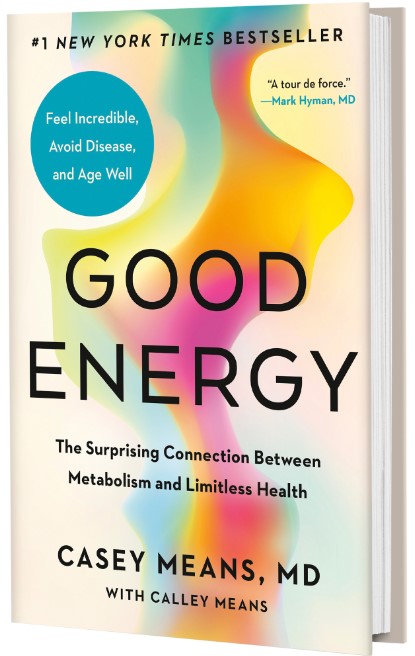
Park Allergy Center highly recommends the book, Good Energy, written by Dr. Casey Means, MD

https://www.caseymeans.com/goodenergy

Dr. Means does a beautiful job explaining how imbalance in metabolism leads to chronic disease and offers a solution to correct that imbalance, leading to incredible, good health.

Here are some recommendations to help you through the spring and summer allergy season.

  1. Nasacort – nasal spray, works best if used daily, no odor
  2. Allegra – effective antihistamine, fewest side effects in the class
  3. Pataday, Pataday Extra Strength – great for allergy eyes
  4. Wash your hair every NIGHT before going to bed.
  5. Go for your walks in the evening. Pollen counts are highest in the mornings.
Copyright © 2018-2021 - Park Allergy Center, PC